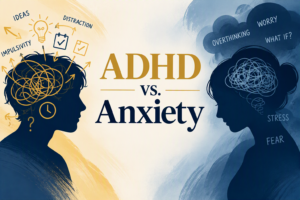
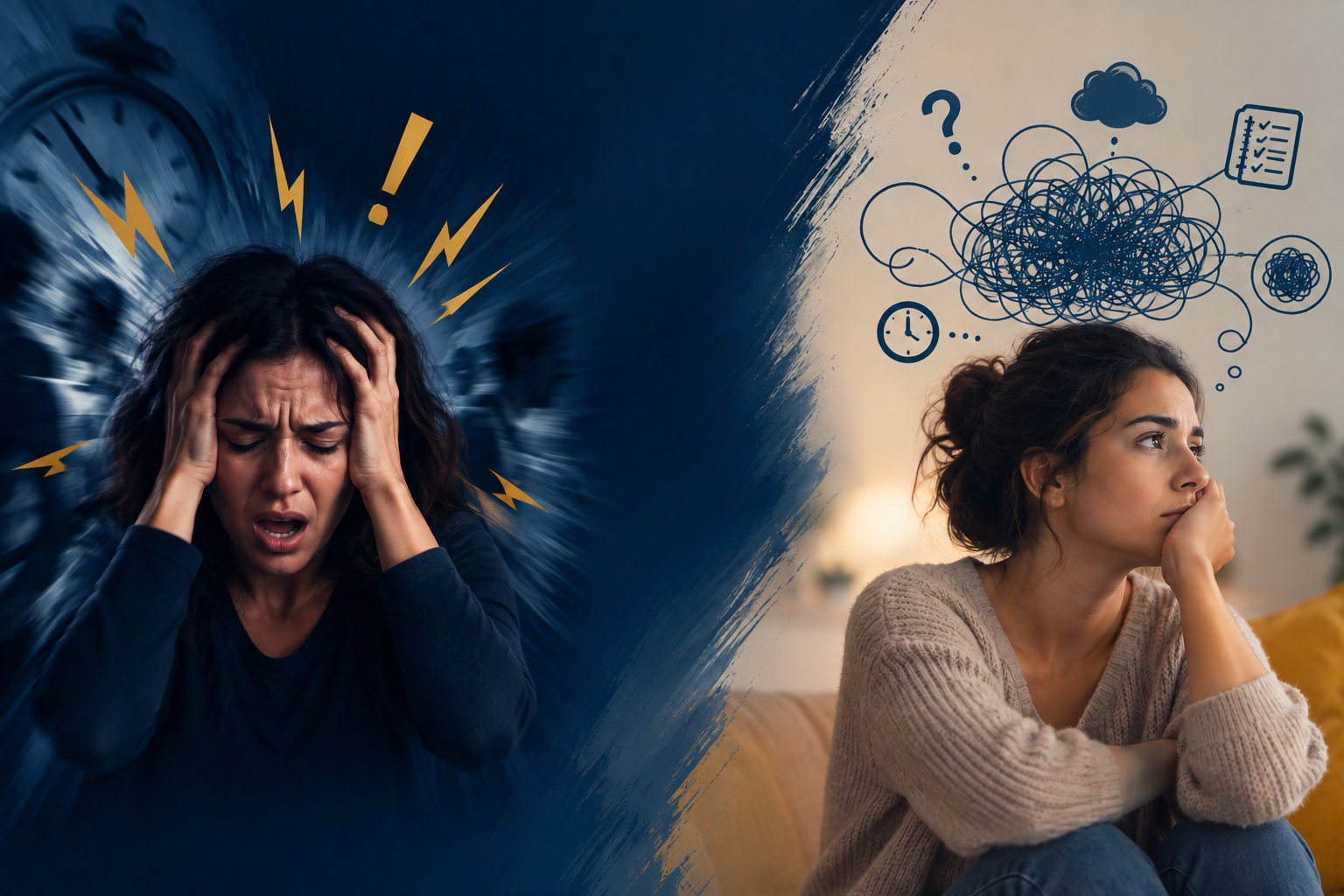
Your heart is pounding, your chest feels tight, and your mind insists something terrible is about to happen. Was it a panic attack or an anxiety attack? If episodes like this keep returning, professional anxiety treatment can help, but it’s worth understanding what you’re dealing with first. People often use the two terms interchangeably, but when you look at anxiety attack vs panic attack more closely, they describe different experiences. The sections below explain how the two compare and what you can do about each.
What Is a Panic Attack?
Panic attack is a sudden wave of intense fear or discomfort that comes on quickly, often without an obvious trigger. The American Psychiatric Association’s DSM-5 describes it as a surge that peaks within minutes and includes at least four symptoms from a list of thirteen.
Those symptoms can include:
- A racing or pounding heart
- Shortness of breath or feeling like you’re choking
- Chest pain or tightness
- Sweating, chills or hot flushes
- Trembling, dizziness or lightheadedness
- Numbness or tingling in the hands
- Feeling disconnected from yourself or as though things around you aren’t real
- A fear of losing control or dying
What Is an Anxiety Attack?
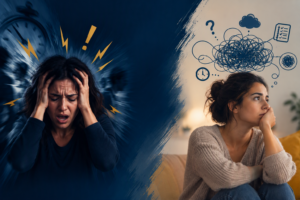
An anxiety attack doesn’t appear in the DSM-5. It describes a surge of intense worry or fear triggered by something specific, such as an upcoming deadline, a difficult conversation, a health concern, or financial stress.
It tends to creep in rather than explode. You might feel restless, tense and unable to switch your thoughts off for hours, or even days, before it crests. The physical side can be strong too, with a fast heartbeat, tight muscles, stomach trouble and trouble concentrating. But it usually feels more like pressure building than a sudden drop through the floor.
Anxiety Attack vs Panic Attack: Key Differences at a Glance
| Factor | Panic Attack | Anxiety Attack |
|---|---|---|
|
Clinical status |
A defined event in the DSM-5 with specific symptom criteria. It is used to help diagnose panic disorder. |
An informal, everyday term with no official definition. It usually describes a severe stress or anxiety response. |
|
Onset |
Strikes suddenly and reaches full intensity within minutes. It can also occur during sleep and wake you up. |
Builds slowly as worry stacks up. You often feel it coming hours or days ahead. |
|
Trigger |
Often has no clear cause. It can happen even when you feel calm, making the experience more frightening. |
Usually tied to a specific stressor, such as work pressure, an exam or a difficult situation. |
|
Intensity |
Overwhelming and extreme. Many people feel like they’re having a heart attack. |
Ranges from mild to severe. It feels like escalating tension rather than a sudden jolt. |
|
Duration |
Peaks in about 10 minutes and usually settles within the hour. |
Can simmer for hours or days and fades only once the stressor eases. |
|
Typical thought |
“I’m dying” or “I’m losing control.” The fear centers on the attack itself. |
“What if this goes wrong?” The fear centers on a future event or outcome. |
The biggest tells are speed and trigger. If it came out of the blue and peaked fast, it was probably a panic attack. If it built around something you were worried about, it fits the anxiety attack pattern better. Real life is messier, though, and the two can overlap or even feed into each other.
Panic Attack and Anxiety Attack Symptoms Both Can Share
Because the physical symptoms overlap so much, telling them apart in the moment is hard. A pounding heart, shaky hands and a tight chest can show up in both. That’s one reason people often miss the earlier, quieter signs of anxiety that appear days before an episode, such as irritability, muscle tension and constant overthinking. Spotting those early gives you a chance to step in before things escalate.
What Helps During a Panic Attack or Anxiety Attack
You can’t always stop an episode, but you can ride it out more gently.
- Slow your breathing. Breathe in through your nose for four counts, then out through your mouth for six. A longer exhale calms your body.
- Ground yourself. Identify five things you can see, four you can feel, three you can hear, two you can smell, and one you can taste.
- Remind yourself it will pass. It feels dangerous, but it isn’t. The peak is brief.
- Cut the fuel. Step outside, drink some water and set down caffeine.
- Don’t fight it. Resisting the sensations often makes them louder. Let the wave rise and fall.
Why Repeated Panic Attacks and Anxiety Episodes Deserve Attention
Occasional stress spikes are part of being human. But when attacks keep coming, life starts to shrink. People begin avoiding the gym, the highway, meetings or crowded places in case it happens again. Sleep suffers too, and it becomes a loop: when anxiety makes it hard to sleep, exhaustion lowers your threshold for the next episode.
Worrying about the next attack, or changing your routine to avoid it, is a sign it’s time to talk to a professional.
Conclusion
Now you understand what a panic attack is, how it differs from an anxiety attack, and why the distinction matters. Panic attacks often come on suddenly and peak quickly, while anxiety tends to build gradually and may last longer. Regardless of what you’re experiencing, you don’t have to navigate it alone. Wexford Health Solutions offers convenient telehealth services, allowing you to discuss your symptoms with a healthcare professional from the comfort of home and explore a care plan tailored to your needs.
Frequently Asked Questions
Can a panic attack wake you up from sleep?
Yes. Nocturnal panic attacks happen when you wake abruptly in a state of fear, often with a racing heart and sweating. They’re less well known but fairly common among people who also have daytime attacks.
Can a panic attack cause lasting physical damage?
No. Panic attacks feel frightening, but they don’t damage the heart or brain. Repeated episodes can leave you exhausted, though, and the fear of them can affect your daily life.
How can I support someone who is having a panic attack?
Stay calm and stay with them. Speak slowly, suggest breathing together, and don’t tell them to “just relax.” Ask what helps. If they’re in pain or the symptoms seem different from usual, call for medical help.
Does caffeine make panic attacks worse?
It can. Caffeine is a stimulant that raises heart rate and can mimic anxiety symptoms, so people prone to attacks often feel better after cutting back.
How many panic attacks does it take to have panic disorder?
There’s no fixed number. Panic disorder is generally diagnosed when attacks are recurring and unexpected, and you spend at least a month worrying about more attacks or changing your behavior because of them.