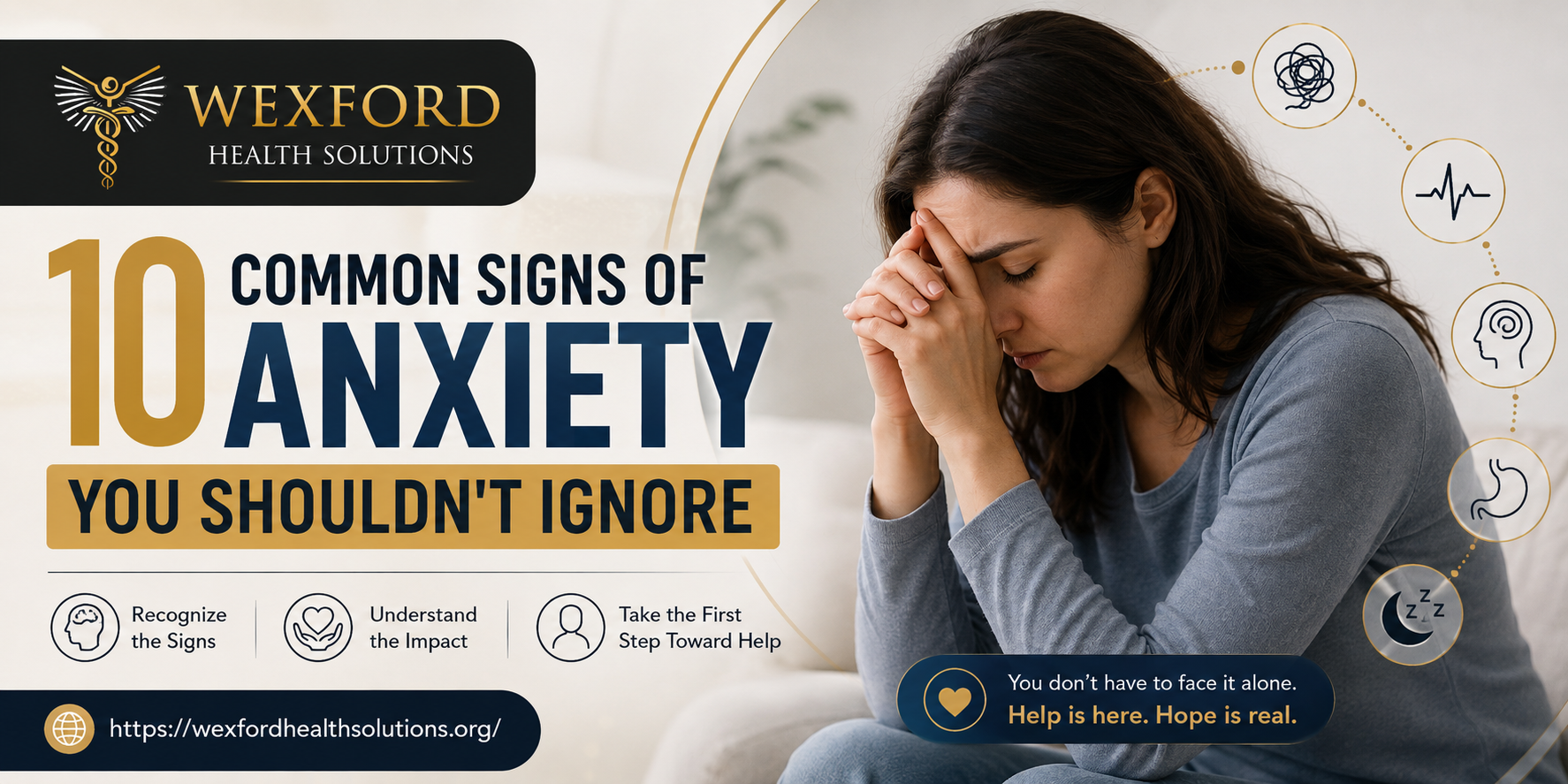
10 Common Signs of Anxiety You Shouldn't Ignore
Everyone feels anxious from time to time. But when worry becomes persistent, difficult to control, or starts interfering with everyday life, it may be more than temporary stress.
Recognizing common anxiety signs can help you understand when occasional worry may have developed into something that deserves attention. The symptoms can vary from person to person, and having one or two symptoms does not necessarily mean you have an anxiety disorder.
AI Overview: What Are the Common Signs of Anxiety?
Common signs of anxiety include excessive worrying, feeling restless or constantly on edge, difficulty concentrating, sleep problems, irritability, muscle tension, physical symptoms such as a racing heartbeat or stomach discomfort, avoiding certain situations, and episodes of intense fear or panic.
When these symptoms persist, become difficult to manage, or interfere with everyday activities, speaking with a qualified healthcare professional may be appropriate.
What Are the 10 Common Signs of Anxiety You Shouldn't Ignore?
1. Do You Worry About Almost Everything?
Everyone worries occasionally. However, anxiety-related worry can feel difficult to switch off.
You may spend a significant amount of time thinking about things that could go wrong, even when there is no immediate reason to expect a problem. Your concerns might involve work, finances, health, relationships, family, or the future.
You may also find yourself imagining worst-case scenarios, repeatedly seeking reassurance, or going over the same situation in your mind.
The important question is not simply whether you worry. It is whether the worry feels excessive, difficult to control, or disruptive to your everyday life.
2. Do You Constantly Feel Restless or On Edge?
One of the common signs of anxiety is feeling like you cannot fully relax.
You may feel tense even when everything around you seems fine. Sitting quietly may feel uncomfortable, and you might constantly feel that you need to check something, prepare for something, or stay busy.
Some people describe this as feeling “on edge.” Others may notice that they have become more impatient or uncomfortable when they are not actively doing something.
If your mind and body rarely seem to switch off, it may be worth paying attention to this pattern.
3. Are You Having Trouble Concentrating?
An anxious mind can make it difficult to focus.
When you are constantly thinking about potential problems, there may be less mental space available for work, studying, conversations, or everyday decisions. You may read something several times without remembering it or start a task only to become distracted by worrying.
For example, you might sit down to complete an important assignment but spend most of your time thinking about what could happen later.
Difficulty concentrating can also create additional frustration. You may start worrying about your performance, which can add another layer of stress to an already anxious mind.
4. Has Your Sleep Changed?
Sleep problems are another common symptom that should not be overlooked.
You may lie awake thinking about conversations, responsibilities, upcoming events, or things that could go wrong. Some people have trouble falling asleep, while others wake during the night and immediately begin worrying.
Over time, poor sleep can contribute to daytime fatigue, irritability, and difficulty concentrating. This can create a cycle in which anxiety affects sleep and poor sleep makes it harder to manage anxiety.
If anxious thoughts regularly interfere with your ability to rest, it may be a sign that anxiety is affecting more than just your mood.
5. Are You Experiencing Physical Symptoms?
Anxiety can affect the body as well as the mind.
Common physical anxiety signs may include:
- Racing or noticeable heartbeat
- Sweating
- Shaking or trembling
- Muscle tension
- Headaches
- Dizziness or lightheadedness
- Shortness of breath
- Nausea
- Stomach discomfort
- Feeling physically exhausted
These reactions can occur because anxiety activates the body's natural stress response.
However, it is important not to assume that every physical symptom is caused by anxiety. Similar symptoms can occur with other health conditions. New, severe, or persistent physical symptoms should be discussed with an appropriate healthcare professional.
6. Have You Become More Irritable?
Anxiety does not always appear as fear or nervousness. Sometimes, it shows up as irritability.
You may notice that small problems bother you more than they used to. You might become impatient during conversations, feel easily frustrated, or have a shorter temper.
Constant worrying can leave you mentally exhausted. When your mind is already dealing with multiple concerns, everyday challenges can feel much harder to handle.
If increased irritability occurs alongside persistent worry, sleep problems, restlessness, or physical tension, it may be useful to consider whether anxiety is contributing to the overall pattern.
7. Are You Avoiding Certain Situations?
Avoidance is one of the behavioral signs of anxiety that can have a major effect on everyday life.
You might avoid social gatherings because you are worried about being judged. You may postpone appointments, avoid driving, decline invitations, or stay away from situations that make you uncomfortable.
Avoidance can provide immediate relief because you do not have to face the situation causing anxiety. However, repeatedly avoiding something can make the fear feel stronger over time.
If anxiety is causing you to stop doing things that are important to you, it may be time to consider professional support.
8. Do You Experience Sudden Episodes of Intense Fear?
Some people experience sudden periods of intense fear or discomfort known as panic attacks.
A panic attack can develop quickly and may cause symptoms such as:
- Rapid heartbeat
- Sweating
- Trembling
- Dizziness
- Shortness of breath
- Chest discomfort
- Nausea
- Tingling sensations
- Feeling that you are losing control
These episodes can be frightening, particularly when they happen unexpectedly.
Having a panic attack does not automatically mean that someone has panic disorder. However, repeated attacks or constantly worrying about having another one can affect your confidence, daily activities, and willingness to leave home or participate in certain situations.
9. Do You Have Constant Muscle Tension?
Pay attention to how your body feels throughout the day.
Anxiety can cause your muscles to remain tense for extended periods. You may notice tightness around your shoulders, neck, jaw, or back without realizing that you are holding tension.
Some people also experience headaches, body aches, fatigue, or general physical discomfort.
These symptoms may develop gradually, so you might not immediately connect them with anxiety. Looking at physical symptoms together with changes in your thoughts, emotions, and behavior can provide a better understanding of what you may be experiencing.
10. Is Anxiety Affecting Your Everyday Life?
Perhaps the most important of all the anxiety signs is the effect anxiety has on your daily life.
Ask yourself:
- Is anxiety affecting my work or studies?
- Am I avoiding people or activities I enjoy?
- Is worrying interfering with my sleep?
- Am I finding it difficult to concentrate?
- Do I frequently need reassurance?
- Have my relationships been affected?
- Do I feel like anxiety is influencing my decisions?
Occasional anxiety is a normal part of life. But when anxiety begins influencing your choices, relationships, responsibilities, or quality of life, it should not be ignored.
How Can You Tell the Difference Between Stress and Anxiety?
Stress and anxiety can feel very similar, which is why many people are unsure about what they are experiencing.
Stress is often connected to a specific situation. You might feel stressed because of a work deadline, financial problem, relationship conflict, illness, or major life change. When the situation improves, your stress may also decrease.
Anxiety can continue even when there is no immediate problem. You may worry about something that has not happened or constantly anticipate that something will go wrong.
The difference is not always obvious. Looking at how long the symptoms last, how intense they are, whether you can control them, and how much they interfere with daily life can provide useful context.
Understanding Is It Anxiety or Just Stress? can help you recognize some of these differences and identify when persistent symptoms may deserve professional attention.
When Should You Seek Help for Anxiety?
You do not have to wait until anxiety becomes overwhelming before asking for help.
Consider talking with a mental health professional if your anxiety:
- Continues for an extended period
- Becomes increasingly difficult to control
- Interferes with work or school
- Affects your relationships
- Disrupts your sleep
- Causes frequent physical symptoms
- Leads you to avoid important activities
- Causes recurring panic attacks
A professional can discuss your symptoms, understand how they affect your life, and help determine whether anxiety may be contributing to what you are experiencing.
Seeking help does not necessarily mean that your symptoms are severe. Getting support early can help you understand what is happening and explore appropriate ways to manage it.
What Can Help With Anxiety?
The right approach to anxiety depends on the individual and the type and severity of symptoms.
Professional treatment may involve psychotherapy, medication, lifestyle changes, or a combination of approaches. Therapy can help people understand anxious thought patterns, develop coping strategies, and gradually change behaviors that may be maintaining anxiety.
Some people may also benefit from medication when recommended by an appropriate healthcare professional.
For people who find it difficult to attend traditional appointments, telehealth anxiety treatment can offer a convenient way to connect with a mental health professional remotely and discuss appropriate care options.
What Are the Most Frequently Asked Questions About Anxiety Signs?
Can anxiety cause physical symptoms?
Yes. Anxiety can cause physical reactions such as a racing heartbeat, sweating, shaking, muscle tension, dizziness, nausea, and changes in breathing. However, persistent or concerning physical symptoms should be evaluated to rule out other possible causes.
Can anxiety affect sleep?
Yes. Worrying and racing thoughts can make it difficult to fall asleep or stay asleep. Poor sleep may also make it harder to manage stress and anxious thoughts during the day.
Can anxiety cause stomach problems?
Yes. Anxiety can affect the digestive system and may contribute to nausea, stomach discomfort, changes in appetite, constipation, or diarrhea. Ongoing digestive problems should be discussed with a healthcare professional.
Is feeling anxious every day normal?
Occasional anxiety is normal, but feeling anxious most days or finding your worries difficult to control may be a reason to seek professional guidance, especially if anxiety is affecting your work, relationships, sleep, or other daily activities.
Can anxiety cause panic attacks?
Yes. Panic attacks can occur alongside anxiety and involve sudden, intense fear or discomfort. They may cause physical symptoms such as a racing heart, sweating, trembling, dizziness, or shortness of breath.
Does avoiding situations make anxiety better?
Avoiding an anxiety-provoking situation can provide short-term relief, but repeated avoidance may reinforce fear and make certain situations increasingly difficult to face.
Can anxiety be treated?
Yes. Anxiety can be managed with professional support. Depending on the individual's needs, treatment may include psychotherapy, medication, lifestyle changes, or a combination of approaches.
How Can Wexford Health Solutions Help With Anxiety Management?
Recognizing anxiety signs is an important first step, particularly when symptoms begin affecting your sleep, work, relationships, or everyday activities.
Wexford Health Solutions provides telehealth psychiatric services designed to make mental healthcare more accessible and convenient. Through virtual care, individuals can discuss persistent worry, panic symptoms, sleep difficulties, concentration problems, and other concerns with a qualified psychiatric professional.
Professional support can help you better understand your symptoms and determine an appropriate approach to managing anxiety. Care can be especially helpful when anxiety has become difficult to manage independently or is beginning to interfere with the things that matter most in your life.
If you have noticed several of these signs of anxiety and they are affecting your everyday routine, speaking with a qualified mental health professional can be a practical step toward understanding your symptoms and finding an appropriate treatment approach.
Learn About Anxiety TreatmentImportant Notice
Disclaimer: This article is intended for general educational purposes and should not be considered a diagnosis or substitute for professional medical advice.
If you are experiencing severe, sudden, or concerning physical or mental health symptoms, seek appropriate medical care.